


AI Agents that earn a place in the flow
Put agents on the same canvas as your apps — triage inboxes, research context, and take approved actions with guardrails. WEXTL makes agent work accountable, not a black box chat.
- GDPR
- Data Encryption
- 2FA
- Local Data Region
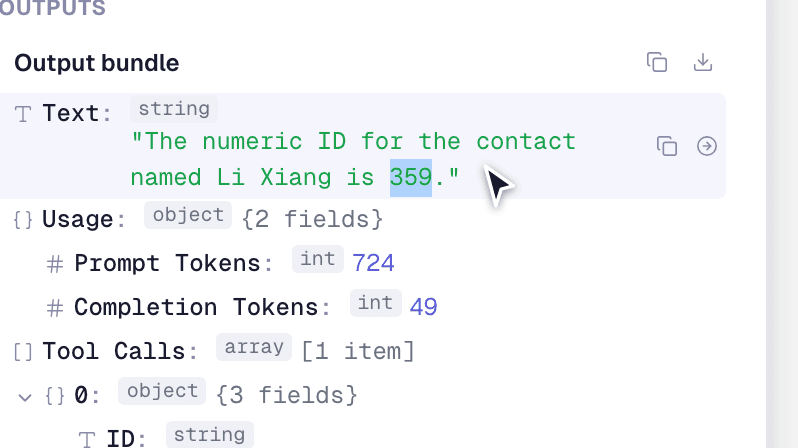
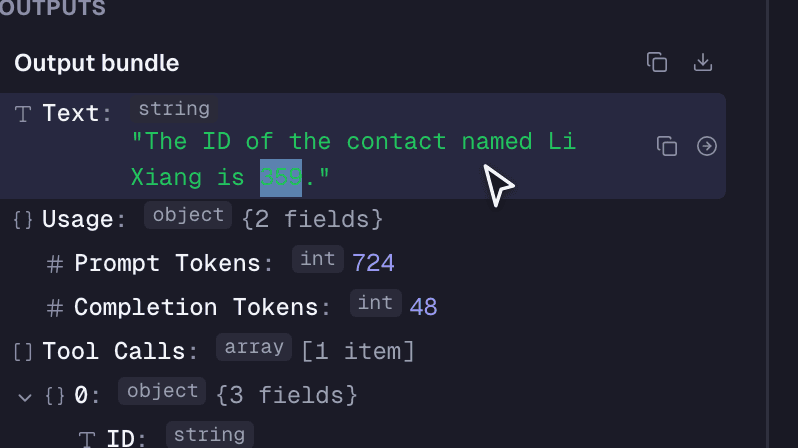
AI agent looking up a contact via Supabase tools on the canvas
What AI Agents helps you do
AI Agents that earn a place in the flow
- 1
Pick the trigger
Mail, Slack, a schedule, or a webhook starts the run — the same trigger types as any WEXTL workflow, resolved before the agent step sees any data.
- 2
Wire the agent's hubs
Attach an AI Model node for the model and credential, a Tools hub for the app actions, Database node, or sub-agents it may call, and optional Memory or Knowledge hubs — each one a node you connect, not a settings modal.
- 3
Branch on what it returns
Route the agent's output through a Filter node reading a field it returned — confidence, topic, whatever you mapped — so the safe branch goes straight through and the rest waits for a human.
Every tool the agent can call is a node you wired
Wire an app action — a Pipedrive update, a Gmail draft, an Asana task create, even a Database node — into the agent's Tools hub, and the model can call it mid-run. There's no hidden tool list: the agent only ever sees tool specs generated from what's actually connected on the canvas. Unwire the Pipedrive node and the agent loses the ability to touch Pipedrive, full stop — the model can't route around what isn't on the canvas.
An AI Agent node can itself be wired into another agent's Tools hub as a sub-agent — a focused 'research' agent called in by a broader 'case handler' agent, each running its own model and its own tool set. Recursion is bounded on purpose: call depth stops at five, and a cycle guard blocks an agent from indirectly calling back into itself through a longer chain, so a mis-wired canvas fails that one tool call instead of running forever.
Attach a Knowledge hub backed by an embeddings collection and WEXTL synthesizes a `knowledge_search` tool automatically — no vector-store glue code to write or host. Attach more than one Knowledge hub and each gets its own distinctly named retrieval tool over its own collection, so an agent can search a product-docs collection and a policy collection separately instead of one blended index.
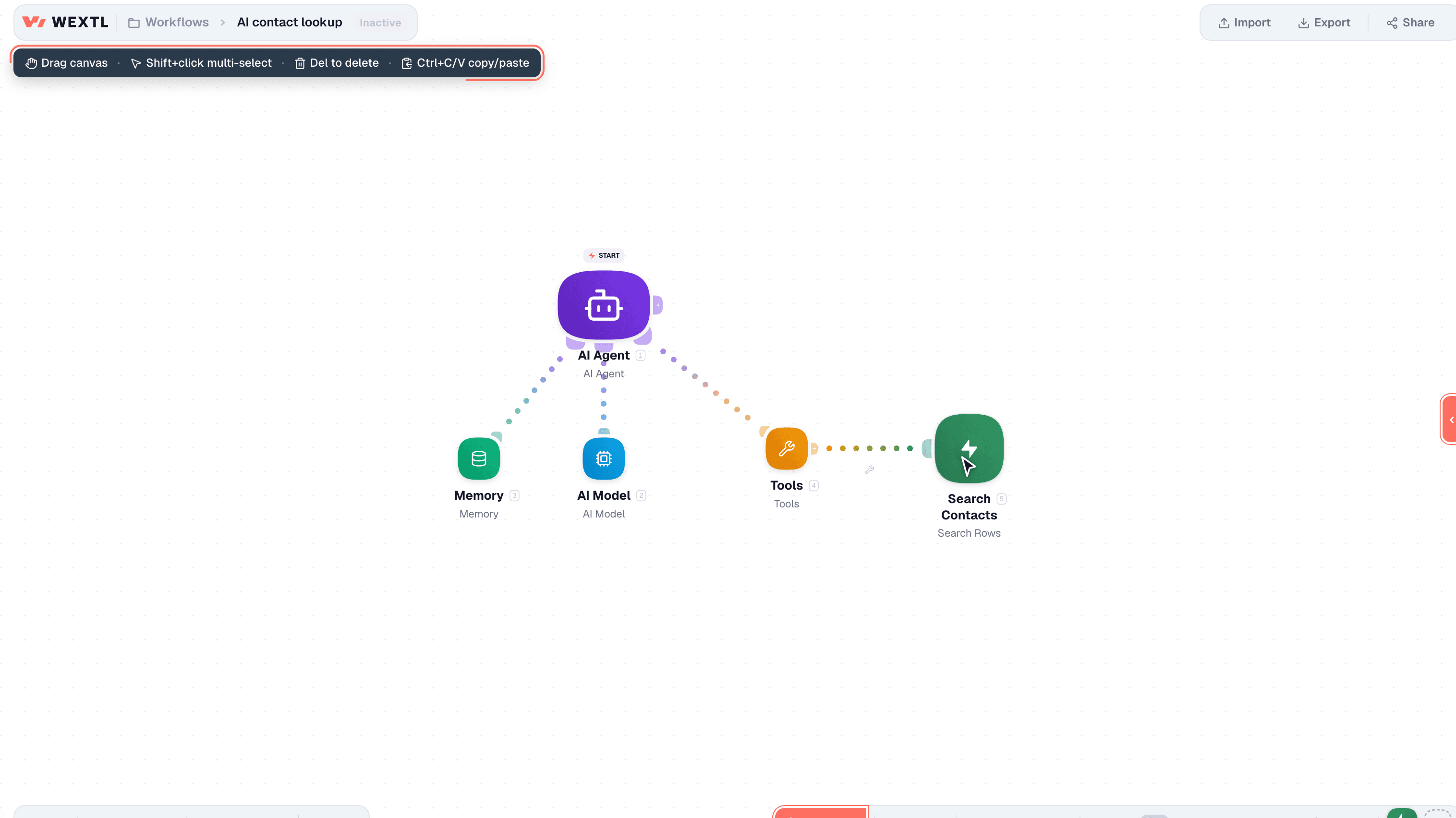

Notion into AI Agent with tools, then Pipedrive and Slack
Memory scoped per entity, output filtered before it ships
Attach an AI Memory node and set persistent or per-run scope, a retention strategy, and a rolling window size — the same param panel as any other node, not a hidden toggle inside a chat product. Set a memory key such as `{{trigger.user_id}}` and the agent's memory buckets automatically per customer or per ticket; leave it blank and every run shares one default scope instead of isolating by entity.
Typeform or mail into an agent, then a Filter node reads a field the agent returned — confidence, topic, whatever you mapped from its output — and only the safe branch reaches Gmail; everything else lands in Slack for a human. Same condition pattern as the rest of the builder: a visible decision fork, not a black-box 'auto-reply' toggle you have to trust blind.
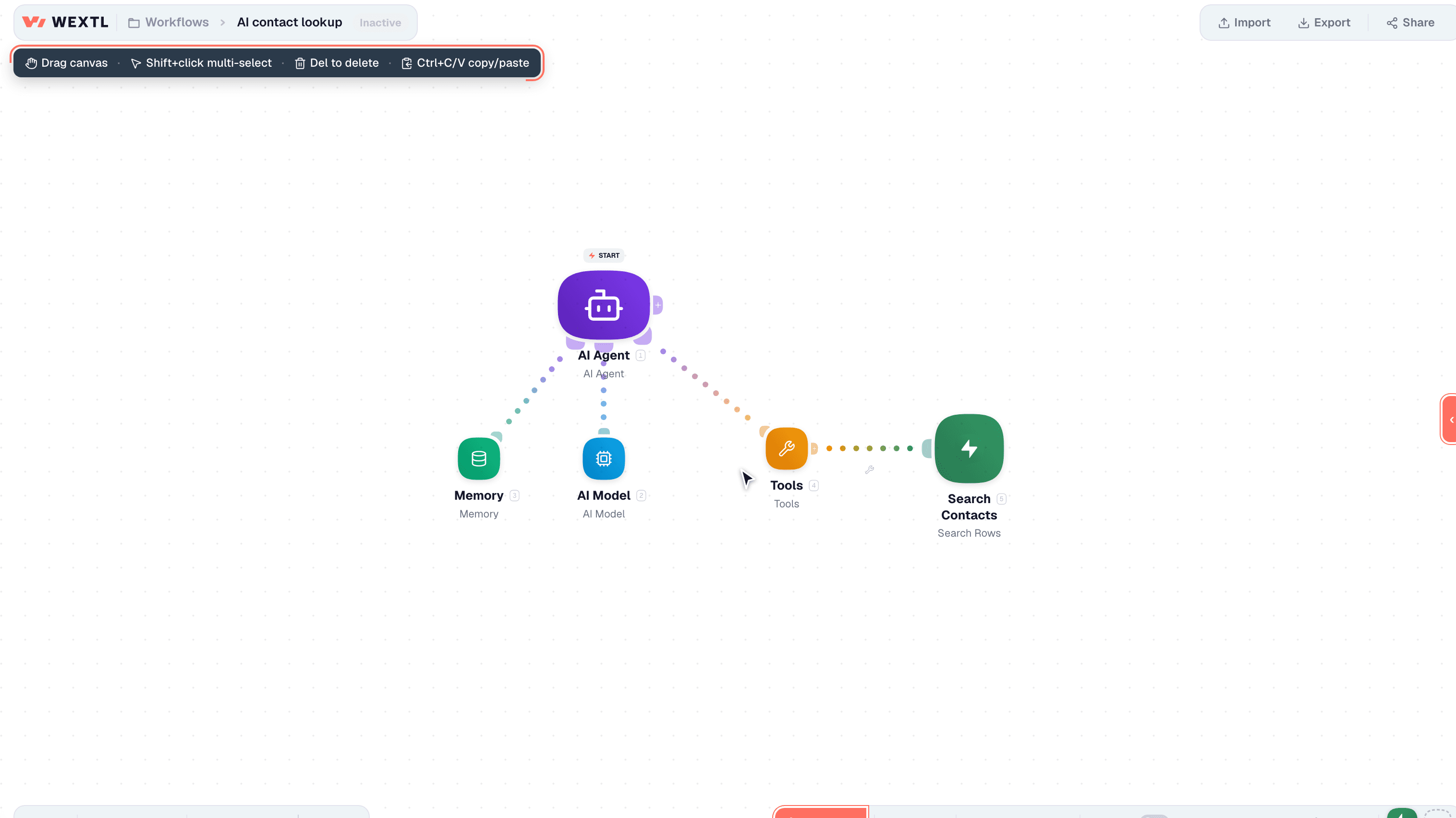

AI agent with policy filter before Gmail send or Slack review


