


Every lead in the right hands, fast
A lead that waits an hour is a lead that bought from someone else. Build a workflow that enriches, scores, and assigns every new lead in seconds — before the thank-you page finishes loading.
Deploys this workflow into your workspace — you'll connect your own accounts.
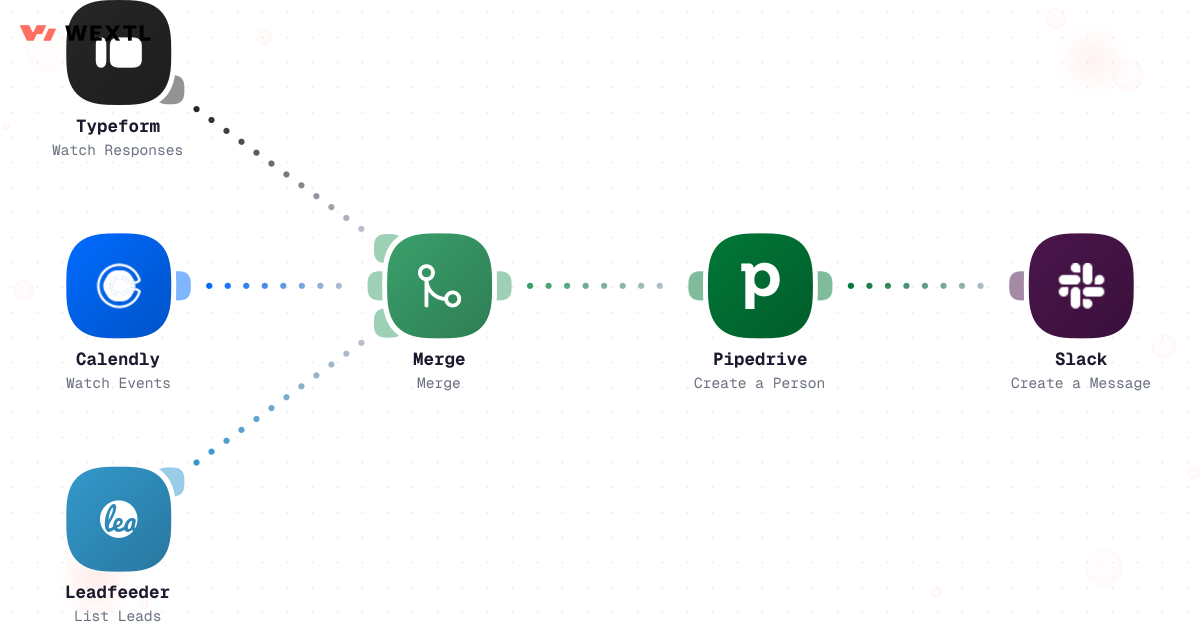
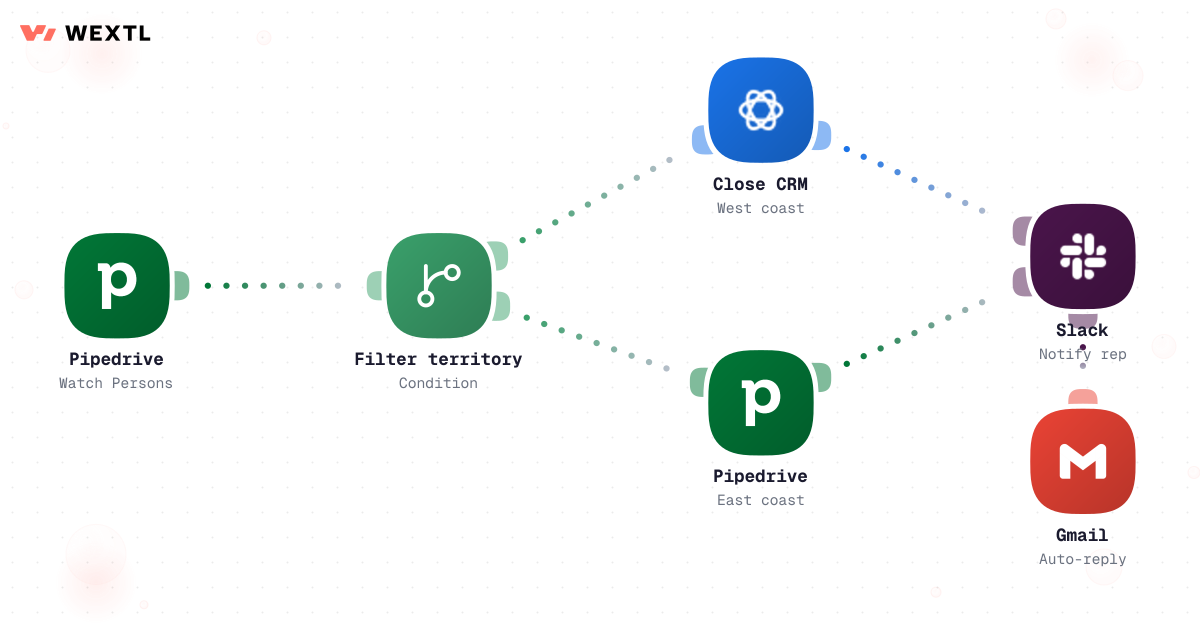
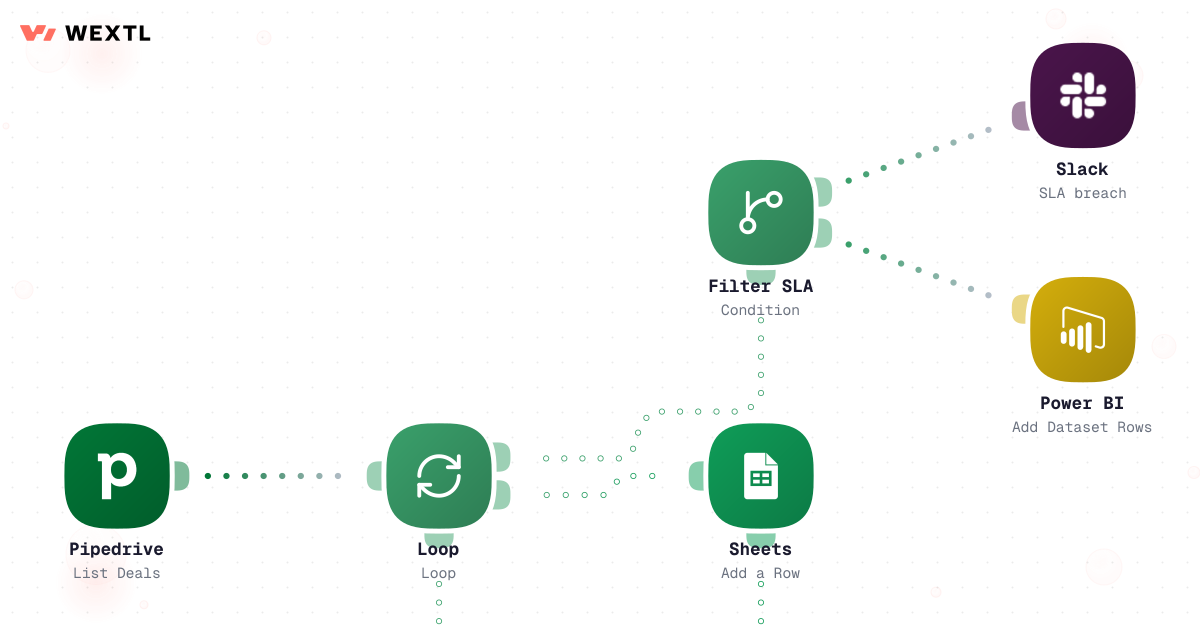
Workflow that loops over incoming lead records and writes each one to the database
- GDPR
- Data Encryption
- 2FA
- Local Data Region
- 4
- lead sources normalized into one capture queue
- 2
- enrichment providers in a fallback waterfall
- <1 min
- capture-to-assignment time on a clean rule match
* Illustrative example, not measured customer data.
Lead routing automation, at a glance
One workflow, from form fill to first call
Pick the routing logic that matches how your team sells. Change it on the canvas when the team changes.
Catch leads from everywhere
Forms, chat, webinars, list imports — every source feeds the same workflow, so nothing depends on who checks which inbox.
- Trigger — a new lead record arrives from any connected source: a form submit, an ad-lead webhook, a chat handoff, or an uploaded list row.
- Information collected — name, email, phone, company, source, campaign/UTM parameters, and consent status where the source captures it.
- Connected applications — Typeform and JotForm for on-site forms, Facebook Lead Ads for paid-social lead forms, Google Forms for fast campaign pages, Google Sheets for one-off list imports.
- Decision logic — matched against existing leads and contacts by email and phone before anything is created; a confident match updates the open record's source list instead of creating a duplicate.
- AI step — normalizes free-text company and job-title fields from ad forms (which don't validate input) into the picklist values the CRM expects.
- Human approval — none by default; a RevOps admin reviews only the weekly queue of near-matches that fall below the auto-merge confidence threshold.
- Actions — writes one normalized record to the queue, tags it with its source, and stamps the capture timestamp that starts the speed-to-lead clock.
- Exception handling — a submission missing the fields required to route (no email or phone) is held in an incomplete bucket instead of entering the queue half-filled.
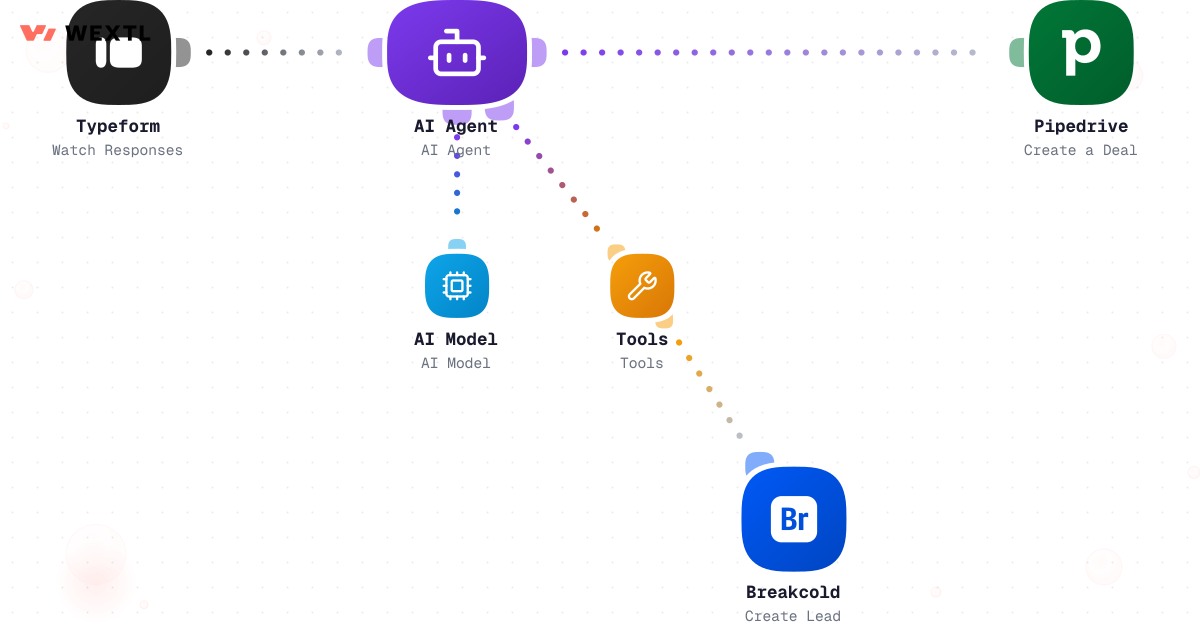
Workflow that loops over incoming lead records and writes each one to the database
What actually breaks a lead-routing setup
None of the individual pieces are hard. A form submit is easy to catch. A round-robin is a counter. What breaks is the seams between sources — the same prospect filling out a form, then a chat widget, then a re-submitted webinar registration, and becoming three leads with three different owners fighting over one deal.
Or the named account that should never touch the general pool, but nobody updated the account list after the deal team signed them, so a six-figure logo lands with whichever rep was next in the rotation.
- Step 1
Three forms, one prospect, three leads
A form fill, a chat handoff, and a re-submitted webinar registration create duplicate records instead of one updated one.
- Step 2
Named accounts fall into the pool
An account list that isn't kept current lets a signed account get assigned like a cold lead.
- Step 3
Spam burns the enrichment budget
A bot-filled form runs through a paid data lookup before anyone notices it was never a real lead.
None of these are edge cases — they're what happens by default when routing rules aren't checked in a specific order.
Example: automate lead capture and deduplication
A concrete run, start to finish — the kind of capture workflow a RevOps admin clones from the template library and points at their own forms and ad accounts.
Trigger: a new submission arrives from any connected source — an embedded form, a Facebook Lead Ads webhook, or an uploaded list.
WEXTL checks: whether the email or phone already matches an open lead or contact, whether the submission has the minimum fields to route, and whether the email passes a deliverability check.
Human judgment
A near-match below the auto-merge confidence threshold — same company, different email domain, for example — waits in a manual-review queue instead of getting silently merged or silently duplicated.
1. Submission arrives
A form fill, ad-lead webhook, or list row triggers the run.
2. Normalize the fields
Free-text company and title fields from ad forms get mapped to the CRM's picklist values.
3. Match against open records
Checked by email and phone against leads and contacts already in the CRM.
4. Branch on the match
A confident match updates the existing record's source list; no match creates a new one; a near-match holds for review.
5. Verify deliverability
An email-verification step flags disposable or undeliverable addresses before the record moves on, and stamps the capture time that starts the speed-to-lead clock.
6. Log the run
Source, match result, and verification outcome are recorded for the audit trail before the record hands off to enrichment.
Example: automate weighted assignment with named-account carve-outs
The same discipline applied to assignment: check the exceptions first, then apply the fair-distribution rule to everything left.
Trigger: an enriched, scored record clears the enrichment stage and enters assignment.
WEXTL checks: the saved named-account list, the lead's territory from company address or phone country code, deal-size band from company size, and each candidate rep's current open-lead count and PTO flag.
Human judgment
A lead that clears no territory and isn't a named account holds in an unassigned bucket for a RevOps admin — it does not get force-assigned to whichever branch matched loosest.
Who lead-routing automation is for
This is infrastructure work, not a rep's day-to-day tool — built by whoever owns the rules, for the sources and destinations their org actually uses.
RevOps managers
— Own the routing rules end to end and need them versioned, not buried in a spreadsheet.Demand Gen managers running paid lead-gen
— Need Facebook Lead Ads and landing-page forms feeding the same queue as organic form fills.Sales Ops administrators
— Maintain territory maps and named-account lists that routing rules have to stay in sync with.Marketing Ops handling MQL-to-SQL handoff
— Need the score and source that qualified a lead to travel with it into sales' queue.SDR team leads enforcing an SLA
— Need speed-to-lead measured per source, not estimated from memory.Systems admins migrating off a legacy router
— Rebuilding routing rules that used to live in a point tool or a CRM's native, limited assignment rules.
WEXTL doesn't replace the routing rules RevOps designs — it's the system that executes them the same way on lead #1 and lead #10,000, and keeps a record of which rule fired each time.
Route on intent, not just form fills
A form fill isn't the only signal worth routing on. A named account revisiting the pricing page after six weeks of silence is a signal too — and it can feed the same queue.
Identified-visitor data enters capture like any other source, gets matched against the account list, and can trigger a notification without waiting for a form to be filled out.
- Step 1
Identify the visitor
Company-match on the visit turns an anonymous pricing-page view into a named account.
- Step 2
Match to the account list
Checked against named accounts and existing CRM records before anything fires.
- Step 3
Notify the owner
The account's existing owner gets a ping instead of the visit going unnoticed.


The sources and destinations lead routing actually connects
Capture has to catch whatever your team actually uses to generate leads. Assignment has to write to whatever CRM your reps actually work in. These are the ones real lead-routing workflows connect most.
An HTTP step reaches anything else with an API.


