

Run the business without running in circles
Handoffs, incidents, and SLAs live in five tools and three channels. WEXTL connects them on a canvas everyone can read — so work moves forward with a log, not a scavenger hunt.
Deploys this workflow into your workspace — you'll connect your own accounts.
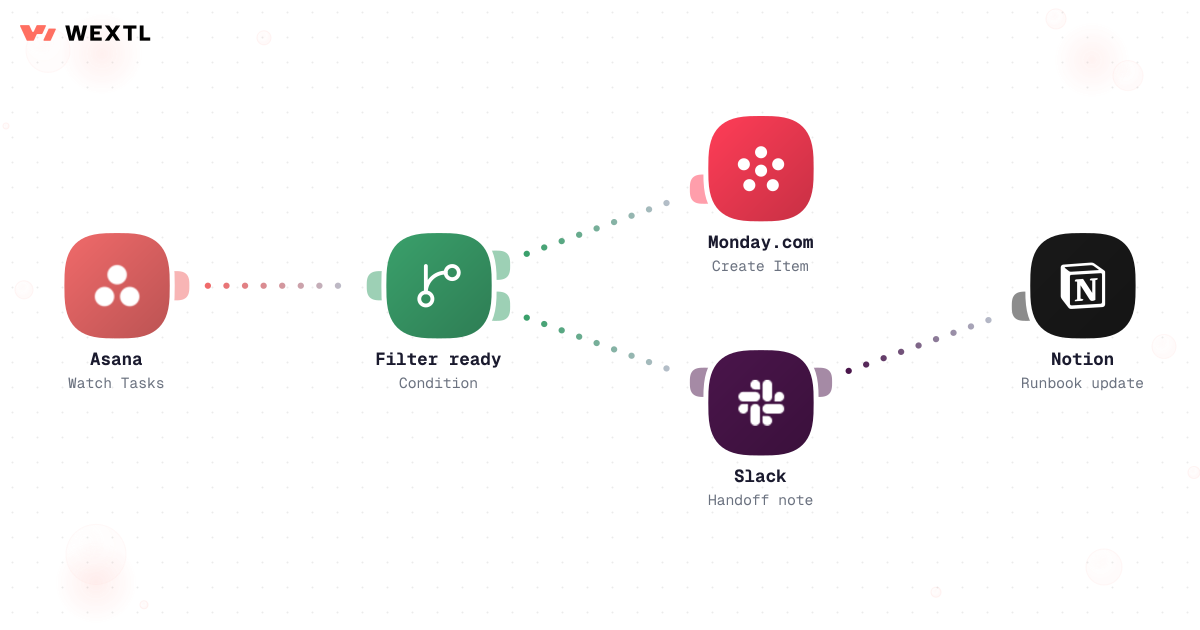
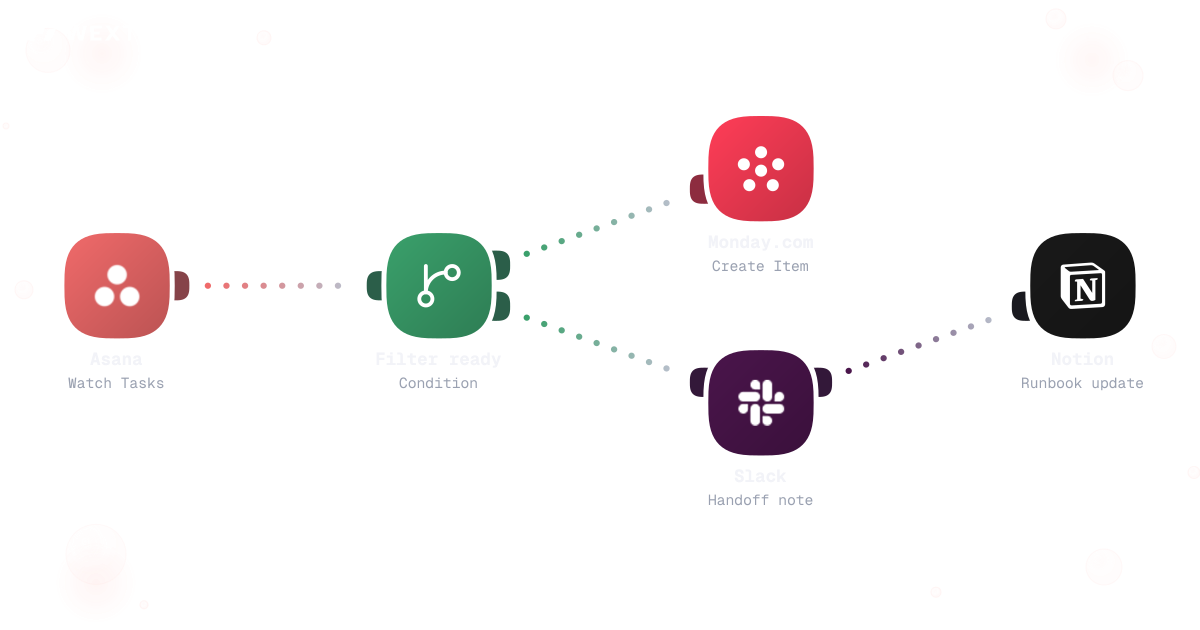
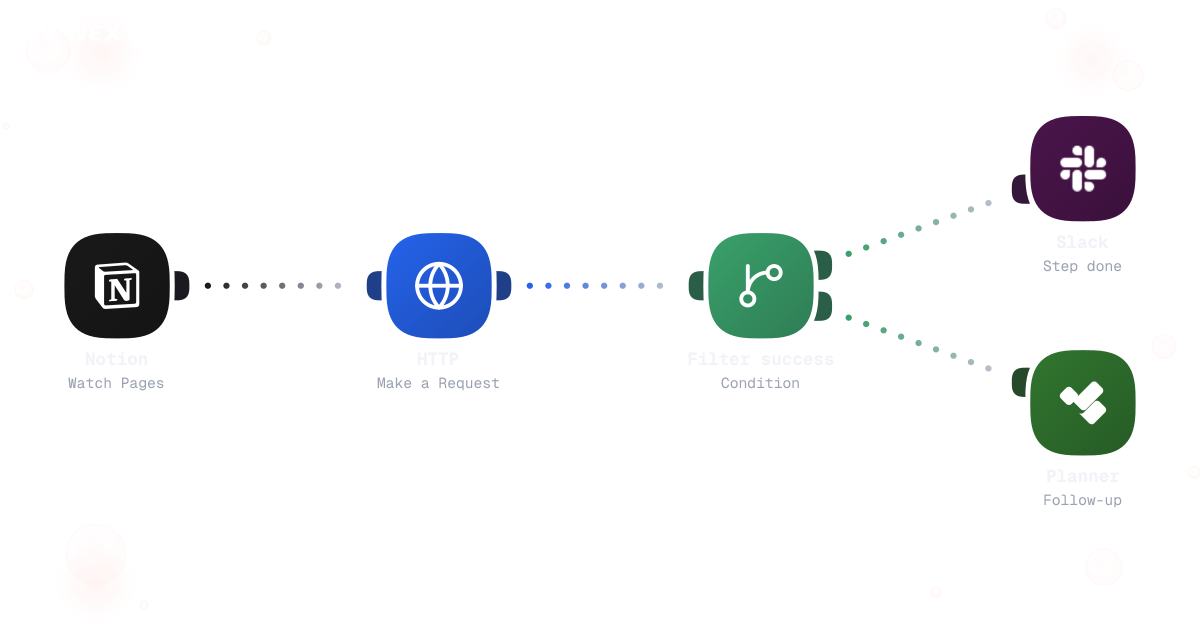
Workflow moving tasks from Asana to Monday with Slack notification
- GDPR
- Data Encryption
- 2FA
- Local Data Region
- 5
- tools a handoff passes through before it's done
- 20 min
- confirming who's on call before touching a SEV1
- 90%
- SLA elapsed before it pages the manager
* Illustrative example, not measured customer data.
Operations automation, at a glance
Operations patterns on one canvas
Cross-team handoffs with context
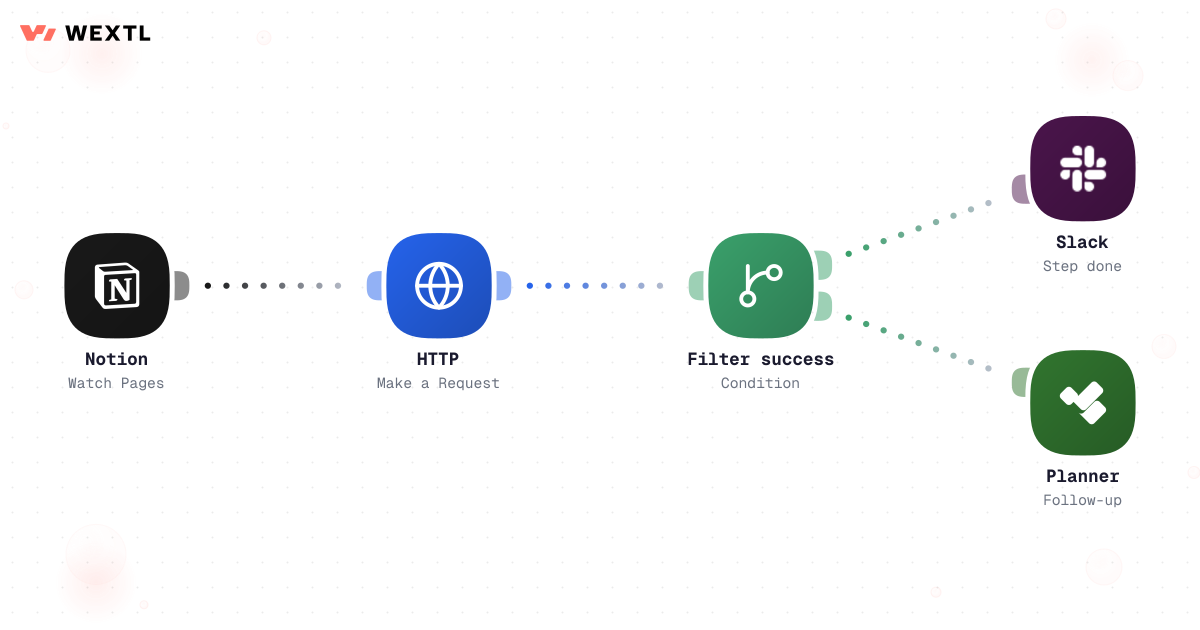
When work is ready in one board, create the item in the next tool and notify the owner.
- Trigger — a work item's status changes to a hand-off state in the source tool (a Jira issue moves to Done, an Asana task is checked complete).
- Information collected — item title, description, checklist/subtask state, attachments, requester, and any priority or severity tag already on it.
- Connected applications — Jira or Asana as the source board, Monday.com or Trello as the receiving team's board, Slack for the handoff notification.
- Decision logic — matched against a routing table keyed by status-change and source team, so a 'ready for QA' ticket lands on the QA board with the right owner, not a shared inbox.
- AI step — drafts a handoff summary from the ticket's comment history so the receiving team isn't re-reading twenty comments to find the one that matters.
- Human approval — only handoffs flagged 'needs context call' wait for a person; everything the routing table resolves creates the downstream item automatically.
- Actions — creates the item in the destination tool with the summary attached, links back to the source ticket, and notifies the owner in Slack.
- Exception handling — when the routing table can't resolve a destination board or owner, the item is held and flagged in Slack instead of being dropped into a random column.
Workflow moving tasks from Asana to Monday with Slack notification
What operations actually fights all day
None of this is complicated work. It's coordination overhead, multiplied by however many tools the org runs on. Handoffs live in five tools and three channels, and 'done' in one tool doesn't mean anything in the next until someone notices and re-types it.
An alert fires and the first 20 minutes go to confirming who's actually on call tonight, not to fixing anything. A ticket sits three days past its SLA warning in a shared inbox nobody individually owns. A runbook exists as a Confluence page with eleven steps, and step 7 has been wrong since the last migration — nobody finds out until someone runs it live during an outage.
- Step 1
The first 20 minutes of an incident
Spent confirming who's paged and where to post, before anyone touches the actual problem.
- Step 2
SLA clocks nobody's watching
A ticket ages past its warning threshold in a shared inbox no single person owns.
- Step 3
Runbooks that drift from reality
A documented step stops matching production, and nobody finds out until it's run live.
None of it needs a hero. All of it needs a system that doesn't forget what the rule was.
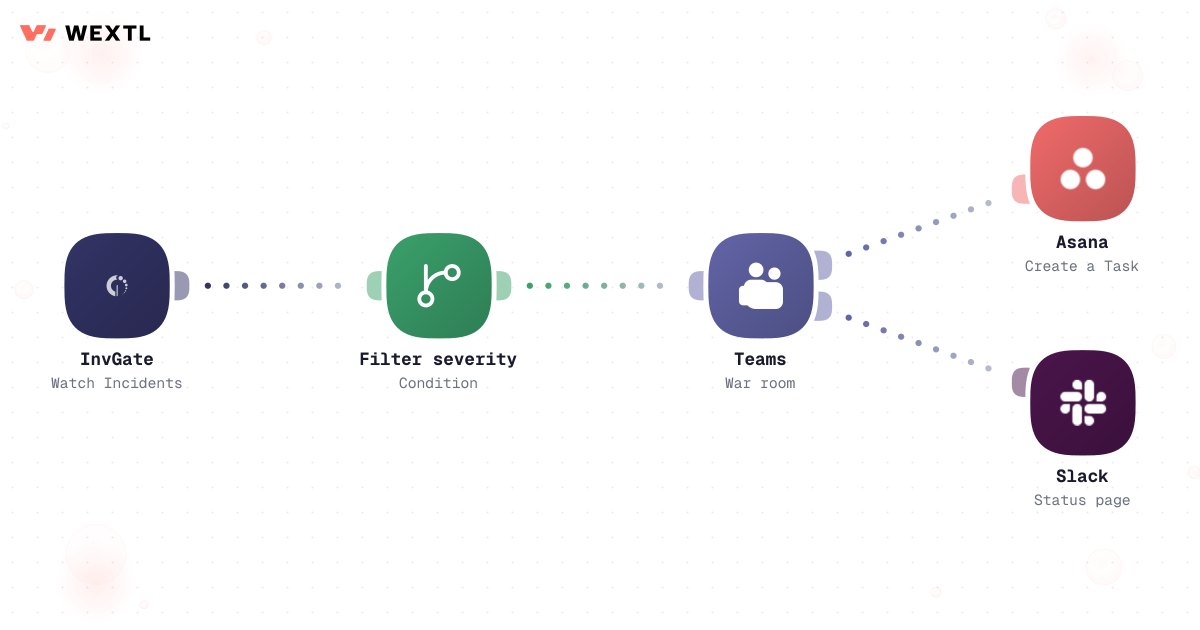
Example: automate incident response
A concrete run, start to finish — the kind of incident workflow an ops or SRE lead clones from the template library and tunes to their own severity levels and rotation.
Trigger: a monitored alert crosses a severity threshold, or a responder declares an incident manually from a Slack command.
WEXTL checks: which service is affected, saved severity criteria for that service, the current on-call rotation (not a static contact list), and whether an incident with this fingerprint is already open.
Human judgment
Whether the outage is bad enough to notify executives, what the status page actually says, and when it's safe to call it resolved stay human calls. The workflow pages the right names and proposes the update — it doesn't decide the outage is over.
Example: automate SLA breach escalation
The same logic, applied to a ticket queue instead of an alert: watch the clock, escalate on schedule, and leave a record a manager can trust without opening every ticket.
Trigger: a scheduled check reads open tickets against the SLA policy attached to each one.
Fields compared: ticket priority tier, elapsed time since open, current status (active vs. paused), and the threshold defined for that policy.
Human judgment
The workflow watches the clock and escalates; it doesn't reprioritize the queue or reply to the customer for the agent. Which ticket gets worked next, and what gets said, stay with the person who owns it.
Who operations workflow automation is for
Not every ops role needs this on day one. It's built for the parts of the job that repeat across a lot of incidents, a lot of tickets, or a lot of tools that don't talk to each other.
IT/Service Operations Managers
— Running handoffs across support, engineering, and PM boards that don't share a status field.On-call engineers and SRE leads
— Standardizing incident response across more than one severity tier and rotation.Support Operations leads
— Accountable for SLA compliance across ticket queues with different policies per tier.Business/RevOps teams
— Coordinating handoffs between departments that don't share a single system of record.Ops teams maintaining runbooks
— Documentation that needs to actually execute, not just describe steps someone might follow.Teams running a shared on-call rotation
— Across more than one tool, where a static contact list goes stale within a quarter.
WEXTL is not trying to replace the on-call engineer or the ops lead — it handles the paging, routing, and logging so a judgment call gets a person's full attention instead of competing with tab-switching between five tools.
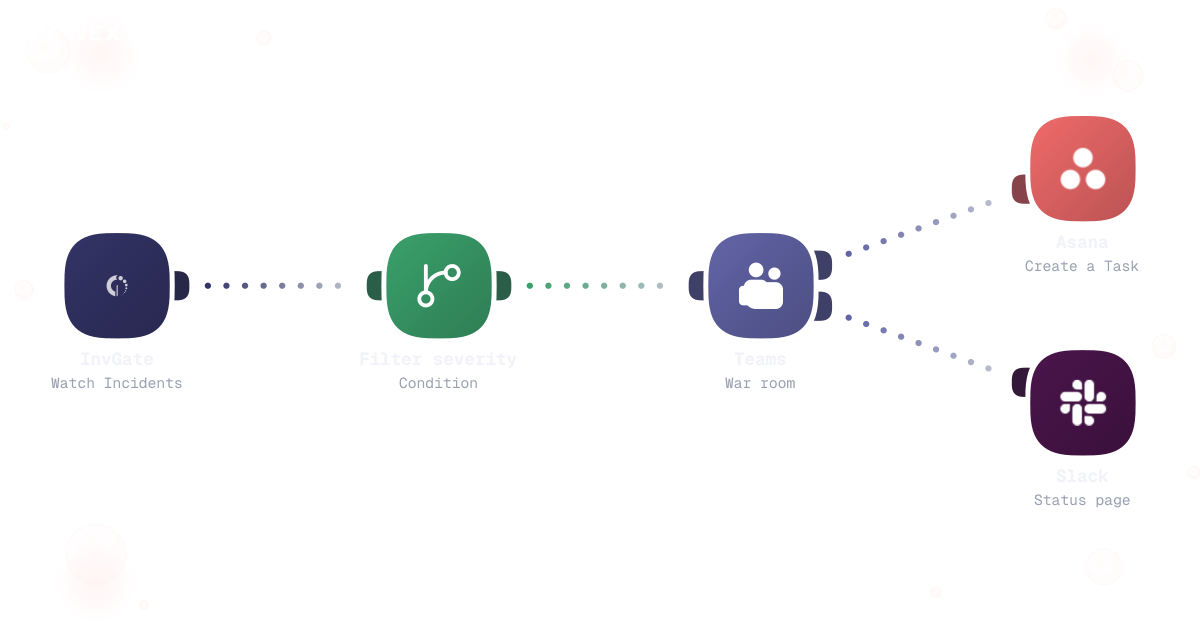
Incidents that page the actual on-call, not a static list
A contact list saved six months ago pages whoever used to be on call, not whoever's actually holding the pager tonight.
Reading the live rotation and opening the war-room channel from the same trigger means the page and the place to coordinate show up together, not five minutes apart.


- Step 1
Live rotation, not a snapshot
Pages whoever's on call right now.
- Step 2
War room opens with the page
Same trigger, same moment — no five-minute gap.
- Step 3
Every page logged
Timestamped for the postmortem, automatically.


SLA breaches logged before the second angry email
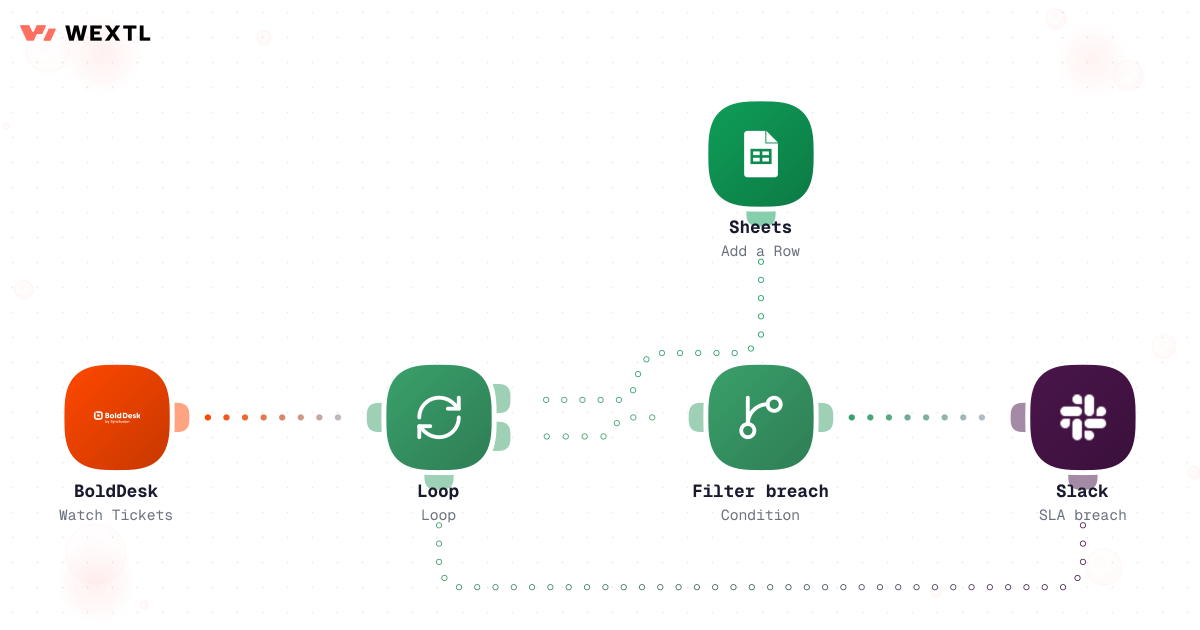
By the time a support lead notices a ticket in the spreadsheet, the customer has usually already followed up twice.
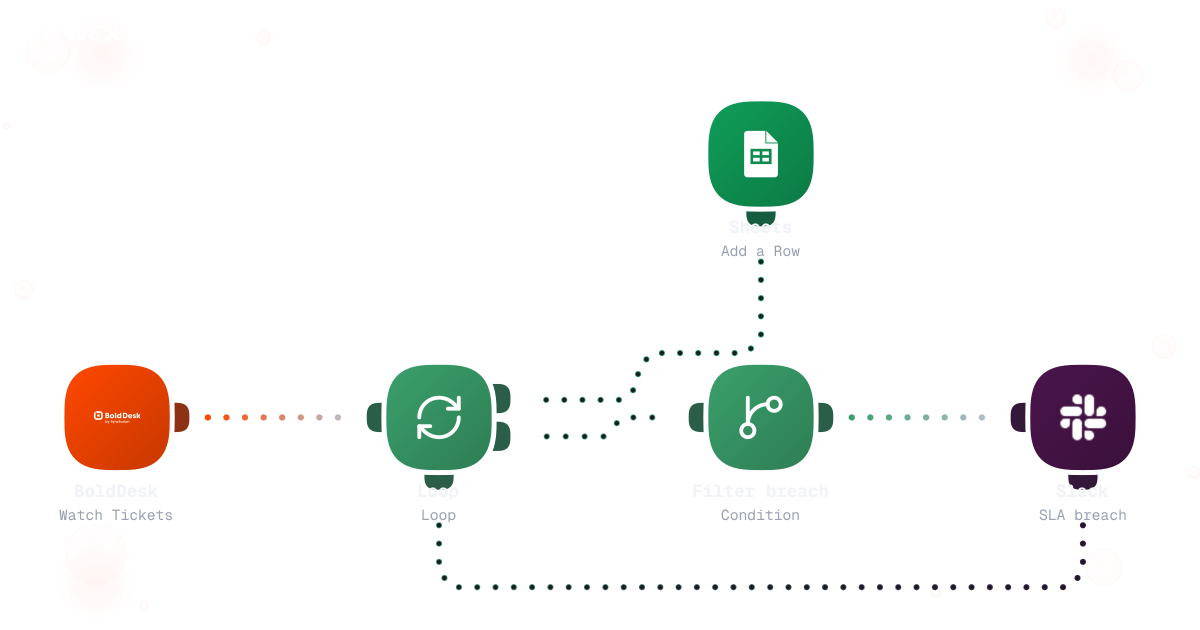
Loop open tickets against their SLA policy, exclude paused time, and log every check — the row exists before the manager has to ask.
- Step 1
Elapsed time, not guesswork
Calculated against the actual policy threshold per tier.
- Step 2
Paused time excluded
A customer's own delay doesn't count against the agent.
- Step 3
Every check logged
The weekly review reads a row, not twelve open tickets.
Connect the tools operations already runs on
Nobody gets to pick one tool for handoffs, one for incidents, and one for runbooks in a growing org — the ticketing system, the PM boards, and the chat tool are already fixed, and usually different per team.
These are the integrations most Operations workflows actually use. An HTTP step reaches anything else with an API, including internal tools.
- JiraEngineering's source board for handoff triggers and ticket status.
- LinearIssue tracking and follow-up tasks created straight from an incident.
- AsanaCross-team task boards on the receiving end of a handoff.
- Monday.comPM boards that receive handoff items with context attached, not a bare link.
- ConfluenceSame runbook parsing for teams standardized on Confluence.


