


Two systems, one truth — without nightly exports
CRM, support desk, spreadsheets, and warehouses drift the moment someone skips an export. WEXTL keeps records aligned with scheduled syncs, webhooks, and reconcile jobs that log every row they touch.
Deploys this workflow into your workspace — you'll connect your own accounts.
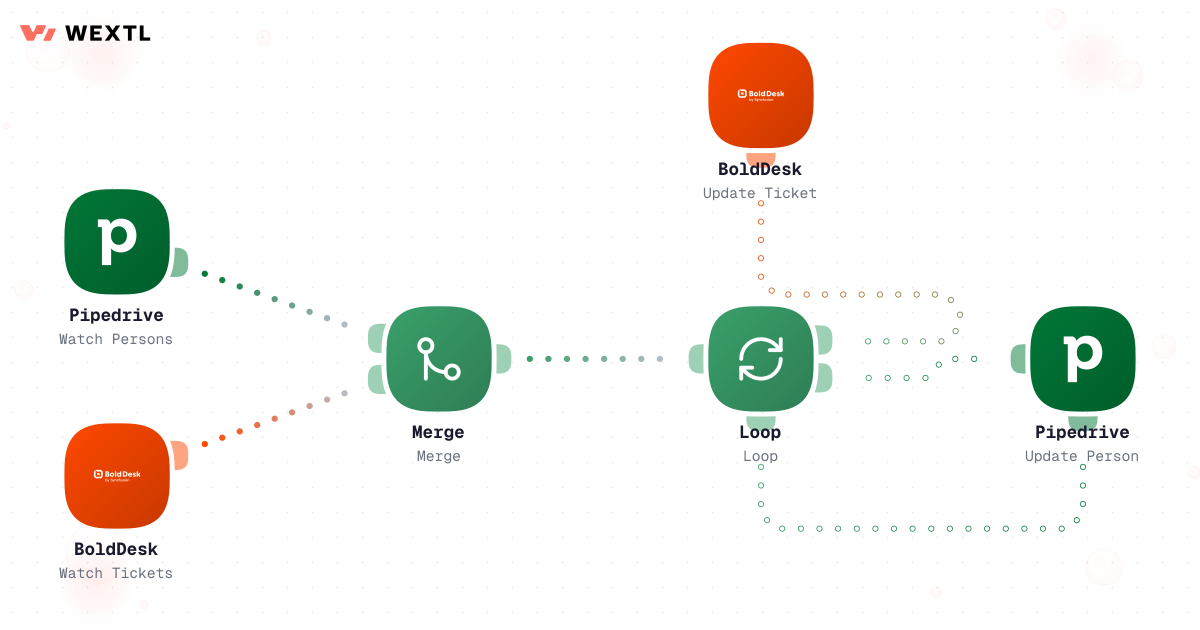
Bidirectional sync between CRM and help desk
- GDPR
- Data Encryption
- 2FA
- Local Data Region
- 4
- systems — CRM, help desk, sheet, ledger — aligned
- 1
- Friday CSV export retired once scheduled
- Nightly
- reconcile flags mismatches before close, not after
* Illustrative example, not measured customer data.
Data sync automation, at a glance
Sync patterns that scale
Keep CRM and support aligned
Aggregate changes from both systems and update records in a bounded loop.
- Trigger — a record changes on either side: a deal stage updates in the CRM, or a ticket's plan/tier field changes on the help desk.
- Information collected — record ID, the changed field(s), the timestamp of the change, and whether the other side has a newer un-synced change to that same field.
- Connected applications — Salesforce or Pipedrive for the CRM side, Zendesk or Freshdesk for the help desk side.
- Decision logic — checked against a source-of-truth map per field (billing fields only ever flow from the CRM, ticket status only ever flows from the desk) so both sides can never claim ownership of the same field at once.
- AI step — normalizes free-text fields (a support agent's note, an inconsistent CRM picklist value) into the structured value the receiving system expects.
- Human approval — a genuine field conflict (both sides changed the same field since the last sync) routes to a person instead of picking a side automatically.
- Actions — writes the update to the other system and stamps a synced-at timestamp so the loop recognizes its own change and doesn't re-fire.
- Exception handling — a record deleted on one side with no matching delete rule pauses that record's sync and flags it instead of deleting it everywhere by default.
Bidirectional sync between CRM and help desk
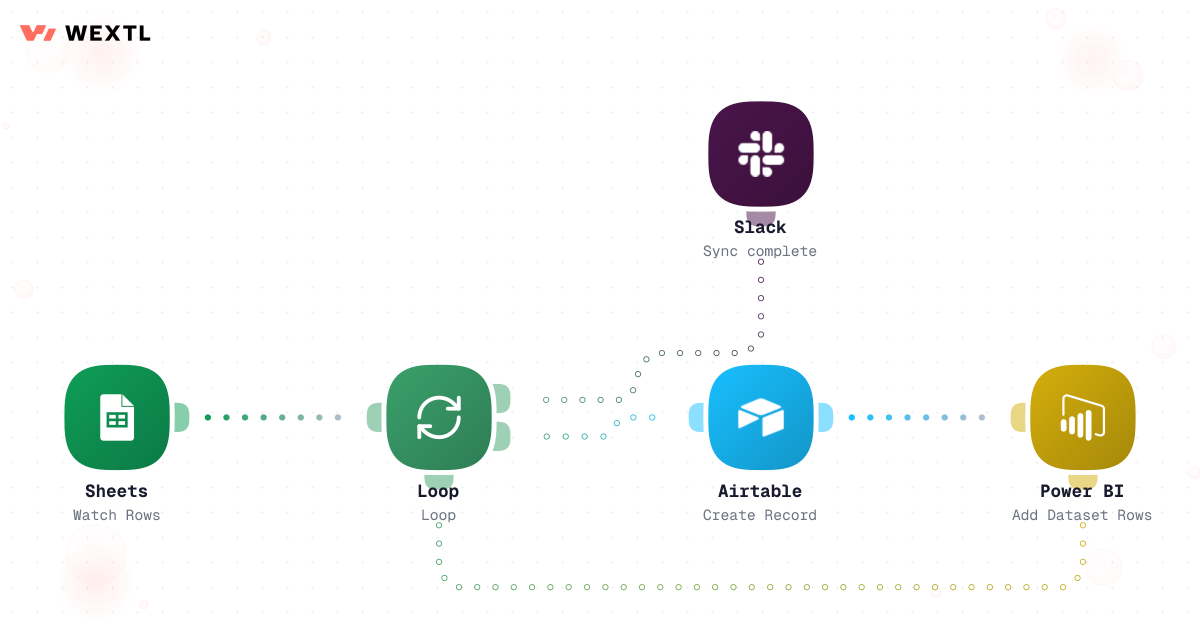
What data ops actually spends a day fighting
None of this needs a data engineer. It needs to happen every day, in four systems — CRM, help desk, spreadsheets, and the ledger — without anyone noticing when it doesn't.
A rep edits a deal at 9am; the help desk ticket for that account still shows the old plan at 2pm because nobody remembered to update it by hand. A Friday afternoon means someone exports a CSV from the CRM, cleans it in a spreadsheet, and uploads it to the warehouse — and if they're out sick, the dashboard is a week stale before anyone notices. A finance close starts with a $340 gap between what Stripe charged and what the ledger sheet says, discovered the morning of the board call instead of the week before.
- Step 1
CRM and help desk disagree
One system updates; the other finds out days later, if at all.
- Step 2
The Friday export ritual
One person's CSV habit is the only thing keeping the warehouse current.
- Step 3
Mismatches found at close
A billing-to-ledger gap surfaces the morning of the board meeting.
None of it needs judgment about which number is right. It needs someone — or something — checking every night.
Example: automate CRM to help desk sync
A concrete run, start to finish — the two-way sync a RevOps analyst clones from the template library and points at their own CRM and help desk.
Trigger: a record changes on either side — a deal stage updates in the CRM, or a ticket's plan or tier field changes on the help desk.
WEXTL checks: which system owns that field under the source-of-truth map, whether the other side has a newer un-synced change to the same field, and whether the record is on the exclusion list (test accounts, archived deals).
Human judgment
A genuine field conflict, a delete without a matching rule, or a record outside the sync scope routes to a person instead of a guess. The workflow proposes the update; a person resolves the conflict.
- Step 1
1. Change detected
A field updates in the CRM or a ticket updates on the help desk.
- Step 2
2. Look up the field owner, check for conflicts
Checks the source-of-truth map, then flags it if the other side changed the same field since the last successful sync.
- Step 3
3. Normalize the value
AI maps free-text notes or inconsistent picklists to the field the receiving system expects.
- Step 4
4. Check the exclusion list, hold conflicts
Test accounts and archived deals are skipped; a genuine conflict routes to a person instead of picking a side automatically.
- Step 5
5. Write the update
Pushes the change to the other system and stamps a synced-at timestamp.
- Step 6
6. Log the row and notify the owner
Every write is recorded for audit, and a Slack note reaches the record owner when a field they watch changes.
Example: automate the nightly billing-to-ledger reconcile
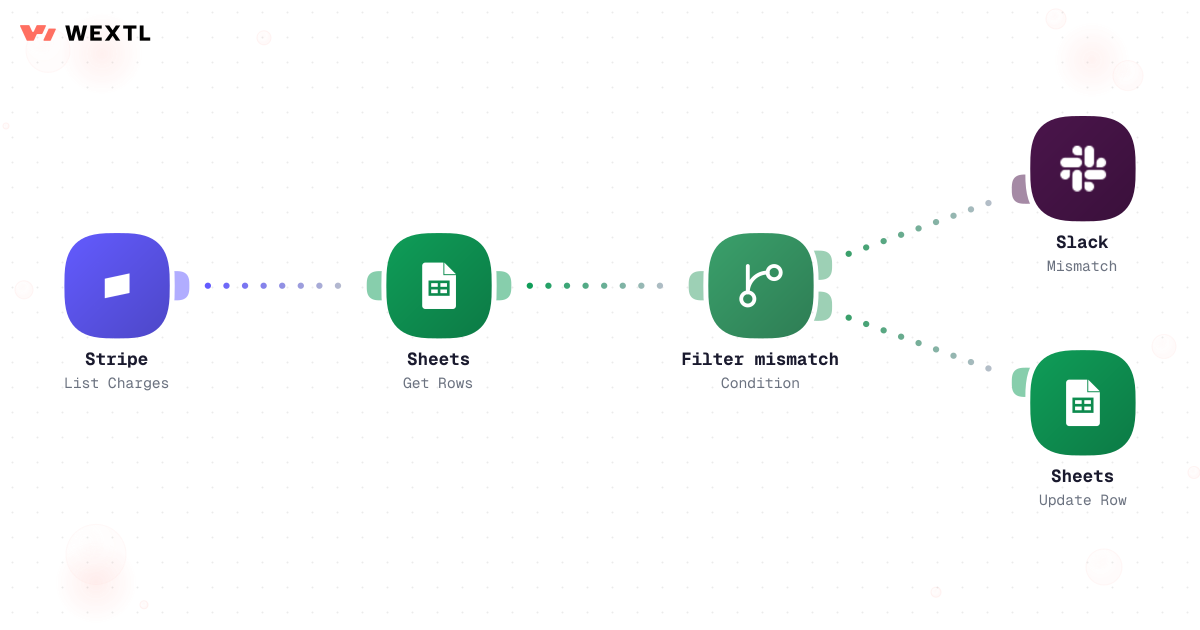
The same discipline, applied to finance: compare two sources every night instead of discovering a gap at close.
Trigger: a scheduled run, timed to finish before the morning close meeting.
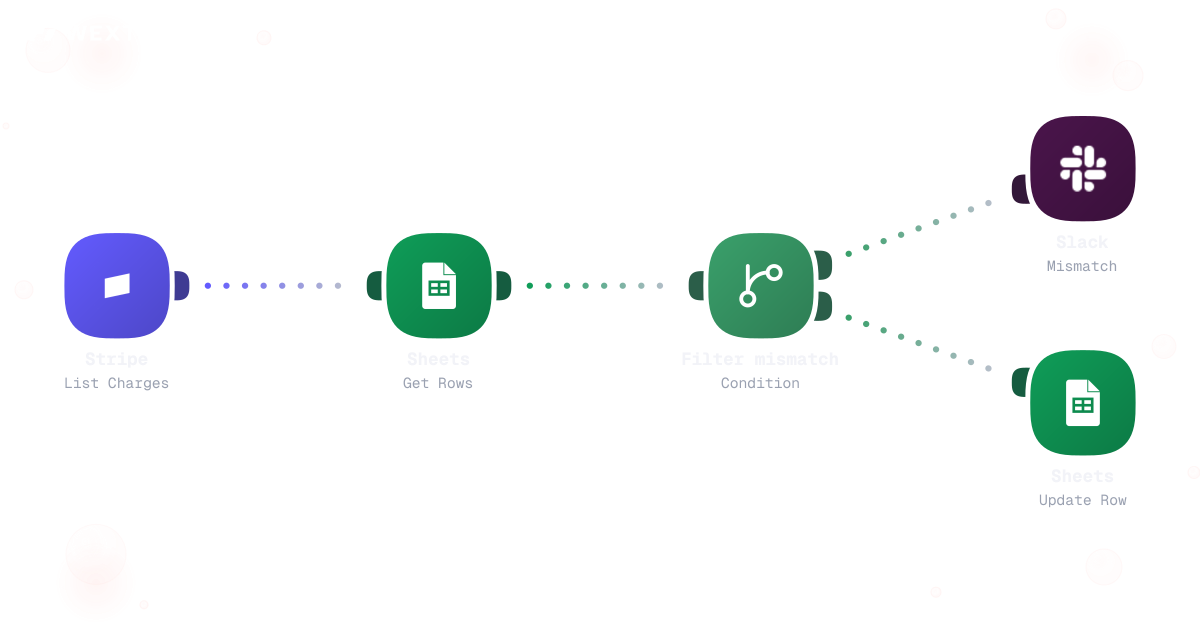
Sources compared: charges from the payment processor and revenue rows in the ledger or CRM for the same date range, matched on invoice or order ID.
Human judgment
The workflow never rewrites the ledger or the CRM on its own — every mismatch is a proposal a person confirms, adjusts, or marks as a known timing difference.
WEXTL is not trying to replace the person who owns data quality — it handles the row-by-row mechanics so that person can spend their time deciding what a conflict means, not chasing which system is right.
Who data sync automation is for
Not every team needs a dedicated sync workflow. It's built for the moments where two or more systems have to agree, and nobody wants to be the manual bridge between them.
RevOps analysts
— Own the CRM and every system that reads from or writes to it.Data or ops engineers without a dedicated pipeline team
— Building ETL by hand in scripts nobody else can maintain.Agencies running multiple client CRMs
— The same sync logic has to run per client account, not once.Finance ops closing the books
— Reconciling billing against the ledger before every close.IT admins bridging HR and finance systems
— New hire and termination events have to reach payroll and access systems the same day.E-commerce ops merging orders across channels
— Orders from a storefront, a marketplace, and a POS all need to land in one inventory count.
Connect the systems your data actually lives in
You don't pick your systems of record — the CRM, the help desk, and the accounting tool are already decided elsewhere. What you control is whether they agree with each other.
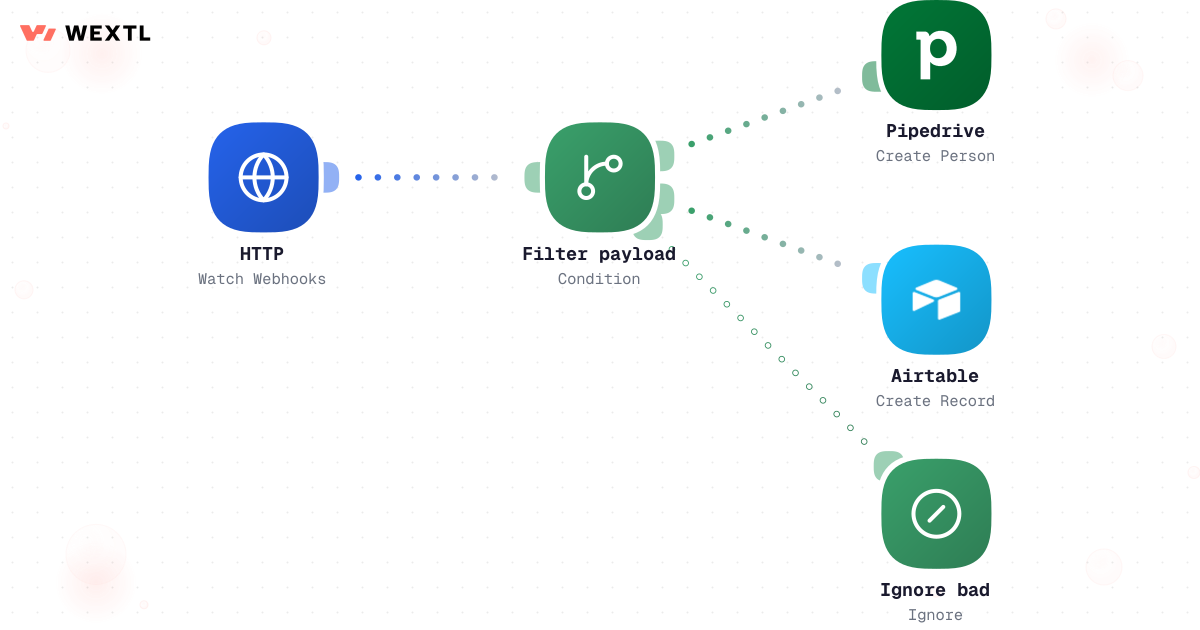
These are the integrations most data sync workflows on WEXTL actually connect. An HTTP step reaches anything else with an API.


Warehouse loads without the Friday ritual
Someone still exports a CSV on Fridays so the warehouse table doesn't go stale over the weekend.
Schedule the pull, validate the rows against the destination schema, and load — with an alert if the source sheet is empty or malformed.
Webhooks that keep systems talking
Polling once an hour is how 'eventually consistent' becomes 'visibly wrong' to a customer.
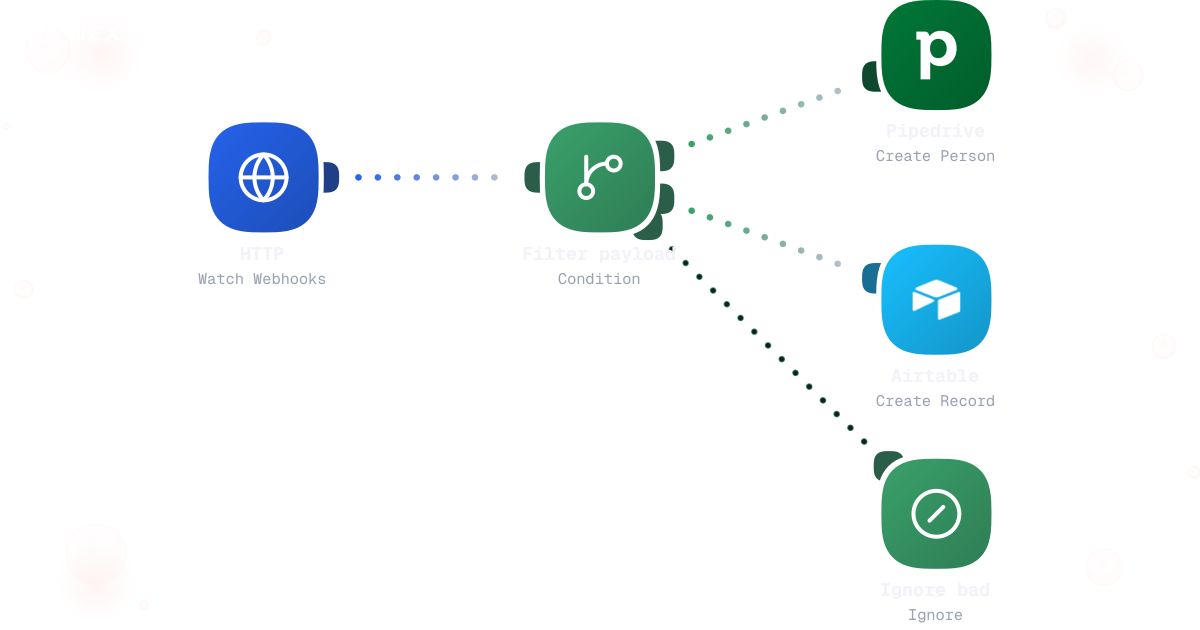
Accept the event, validate the payload, write the record, and acknowledge — with retries queued if the destination is briefly down.


Instant trigger
Fires the moment the event lands, not on the next poll.
Signature checked first
Unverified payloads are dropped before they touch a record.
Retry with backoff
A brief CRM outage queues the write instead of losing it.


