


AI Workflow Automation for Executive Assistants
Run three calendars without losing your evening.
Scheduling ping-pong, inbox triage, meeting prep, expense chasing — the work that eats your day in five-minute bites. Hand the repetitive parts to a workflow and keep the judgment calls.
Deploys this workflow into your workspace — you'll connect your own accounts.
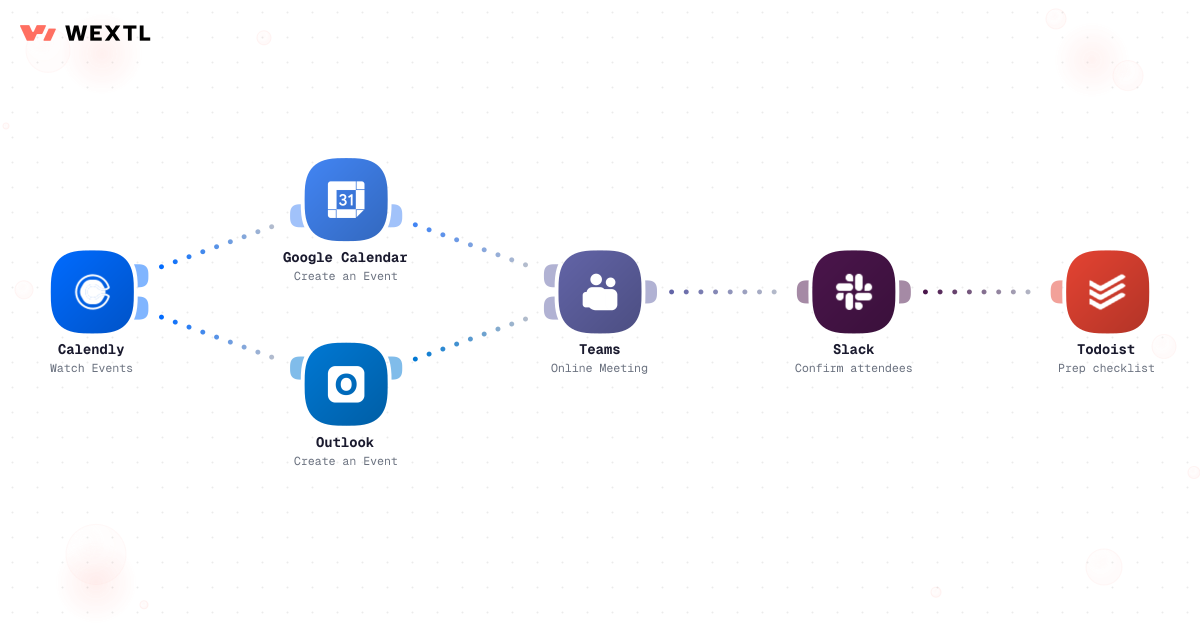
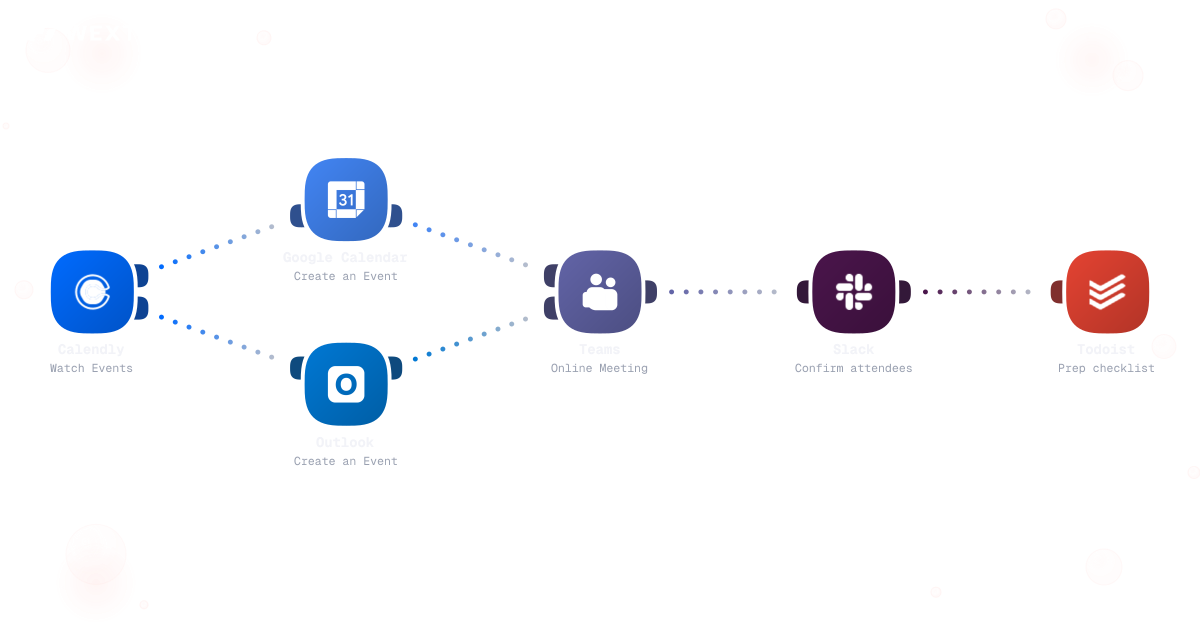
Workflow that works through a list of meeting requests and confirms each one
- GDPR
- Data Encryption
- 2FA
- Local Data Region
- 3
- calendars, one inbox to run them from
- 11
- emails to find a slot, by hand
- 40 min
- of morning triage before real work starts
* Illustrative example, not measured customer data.
Executive Assistants automation, at a glance
What executive assistants can automate with AI
Four categories cover most of an EA's repetitive work. Each shows exactly how the workflow triggers, decides, and knows when to stop.
Calendar handoffs that handle themselves
A meeting request moves through one workflow — checked against real rules, confirmed, and logged — instead of six email threads.
- Trigger — a new meeting request lands in the exec's inbox or a booking link is used.
- Information collected — sender, requested time window, meeting type, and the exec's current calendar.
- Connected applications — Google Calendar or Microsoft Outlook for availability, Zoom or Calendly for the meeting link.
- Decision logic — checked against saved conditions (no meetings after 4pm, buffer before board calls, working-hour and time-zone rules, separate rules for internal vs. external requesters where you've set them) before a slot is proposed.
- AI step — drafts the reply with a proposed time and any context the requester needs.
- Human approval — reschedules and any reply to a VIP or sensitive contact route to you before sending, unless auto-send is on for that condition.
- Actions — confirms the slot, creates the calendar event, and notifies the room or team if one is needed.
- Exception handling — a conflict, an unclear request, or a contact outside your rules gets forwarded to you instead of a guess.
Workflow that works through a list of meeting requests and confirms each one


What an EA actually spends a day fighting
None of this is complicated work. It is just constant. A meeting request needs three back-and-forths before a time sticks. An inbox fills overnight with eleven things that do not matter and one that does, and they look identical until you have read all twelve. A brief has to exist before a call whether or not last night gave you time to build one.
- Step 1
Scheduling ping-pong
Three back-and-forths before a time sticks.
- Step 2
The overnight inbox
Eleven things that do not matter, one that does.
- Step 3
Building a brief at 11pm
Assembled the night before, by hand.
None of it needs your judgment. All of it needs to happen anyway.
Example: automate executive meeting scheduling
A concrete run, start to finish — the kind of scheduling workflow an EA clones from the template library and adjusts to match how their exec actually works.
Trigger: a new meeting request arrives — an email asking for time, or an external contact using a booking link.
WEXTL checks: calendar availability across every connected calendar, working-hour and time-zone rules, saved preferences and buffers (no meetings after 4pm, fifteen minutes before board calls), existing holds and commitments, and any VIP or priority rules configured for specific contacts.
Human judgment
A double-booked VIP, a request from someone outside your rules, or any reply that needs tone rather than facts routes to you instead of getting a guess. The workflow proposes; you decide the judgment calls.
Example: prepare an executive before a meeting
The same logic, applied to meeting prep: pull from every source that actually has context, then hand over only what's decision-ready.
Trigger: a meeting starts within a set window on the connected calendar.
Sources combined: calendar details, CRM notes, recent email with the attendees, notes from the previous meeting, open tasks, and any documents linked to the deal or project.
Human judgment
If the calendar and CRM disagree about a meeting, or a source is missing entirely, the brief flags it instead of picking one silently — you resolve it before it reaches the exec.
What is an AI executive assistant?
"AI executive assistant" gets used to mean a chatbot, a scheduling bot, or a fully autonomous agent — three different things. Here, it means three layers working together, not a replacement for the EA.
- Step 1
AI
Classifies, summarizes, extracts, and drafts — reading a thread, writing a reply, pulling the right CRM fields.
- Step 2
Workflow automation
Moves a request from inbox to calendar, checks it against the rules you've set, updates the CRM or brief, and logs what happened at each step.
- Step 3
Human judgment
Sensitive communications, exceptions, ambiguous requests, and relationship-sensitive decisions stay with the EA.
WEXTL is not trying to replace the executive assistant — it handles the repetitive coordination and information work so the EA can spend more time on judgment, relationships, priorities, and decisions.
What executive assistants should not automate blindly
Sensitive executive communications, relationship-sensitive replies, ambiguous scheduling calls, and anything with incomplete or uncertain context are exactly where automation should stop and hand back to a human — not because the tooling can't attempt them, but because getting them wrong costs more than doing them slowly.
Where a human stays on
Anything that sends mail as the exec, any reply where tone matters more than facts, any expense that needs the exec's own card. The workflow drafts, flags, and proposes for these — it does not decide.

Automate the routing
Requests, filing, and briefs assemble without you.
AI drafts, does not send
Auto-send is an opt-in switch, not the default.
Humans keep the card
Anything charging the exec's card stays a human call.
Who executive assistant automation is for
Not every EA role needs this on day one. It's built for the parts of the job that repeat across a lot of meetings, a lot of messages, or a lot of systems.
EAs supporting multiple executives
— The same scheduling and triage logic runs per calendar, not once.EAs managing complex calendars
— Multiple time zones, standing meetings, and frequent reschedules.Chiefs of Staff and executive ops
— Coordinating information across more systems than one inbox can hold.Assistants handling high-volume scheduling
— Enough requests that a few minutes each adds up to hours a week.Assistants building recurring meeting prep
— The same kind of brief, assembled before every call.Teams coordinating across multiple systems
— Calendar, CRM, and mail that don't talk to each other on their own.
A day of executive support, by hand vs. with WEXTL
Not a hypothetical — the moments an EA actually navigates in one day, and what changes when a workflow runs alongside.
Judgment showed up exactly where it mattered — the sensitive reply, the ambiguous request. Everything else just ran.


The overnight inbox, already sorted
Forty minutes of triage before real work is a tax on every executive day.
An AI pass files the routine, summarizes threads, and hands you only what needs a decision.
Briefs that build themselves
The cost of a prepared exec is the night before — pulling notes and open items by hand.
On a schedule, gather attendees, last conversation, and open deals into one brief.

Connect the tools your executive already uses
You don't get to choose the tools. The exec's calendar, inbox, and CRM are fixed — whatever you automate has to meet them where they are.
These are the integrations most Executive Assistant workflows actually use. An HTTP step reaches anything else with an API.
- GmailReads incoming mail, classifies it, and drafts replies for review.
- Microsoft OutlookSame triage logic for teams standardized on Outlook and Microsoft 365 calendars.
- SlackMorning digests, flagged messages, and meeting briefs delivered where the team already talks.
- ZoomMeeting links generated and attached the moment a slot is confirmed.


Judgment stays with you, by default
An EA's job carries disclosure risk as much as busywork — the wrong auto-sent reply to a board member is a bigger problem than a slow one. Every AI step here defaults to draft-and-review, not draft-and-send, and every run is logged per step, so you can see exactly what was read, what was decided, and what an AI drafted before anything reaches an inbox.
Start from a template another EA already built and tuned — meeting-briefs and inbox-triage are cloneable, not blank canvases — then adjust the branches to match how your exec actually works.
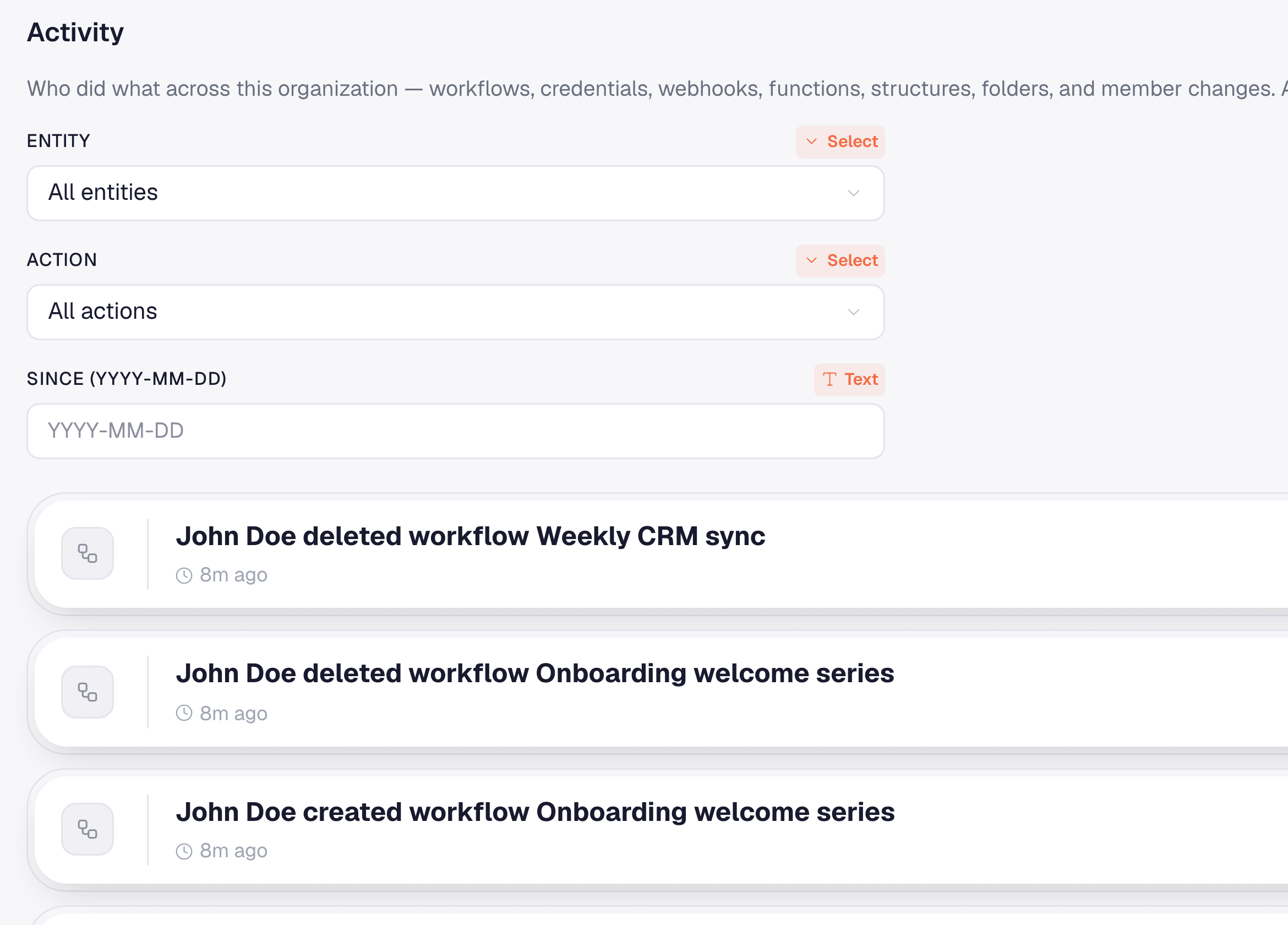


A week of assistant work, by hand vs. with WEXTL
* Illustrative example — a typical week, not measured customer data.